
Braces, and not the ones you remember
Still the workhorse of orthodontics, and much less of an imposition than it used to be. Brackets are smaller, wires are gentler, and because they are fixed there is nothing to remember to put in.
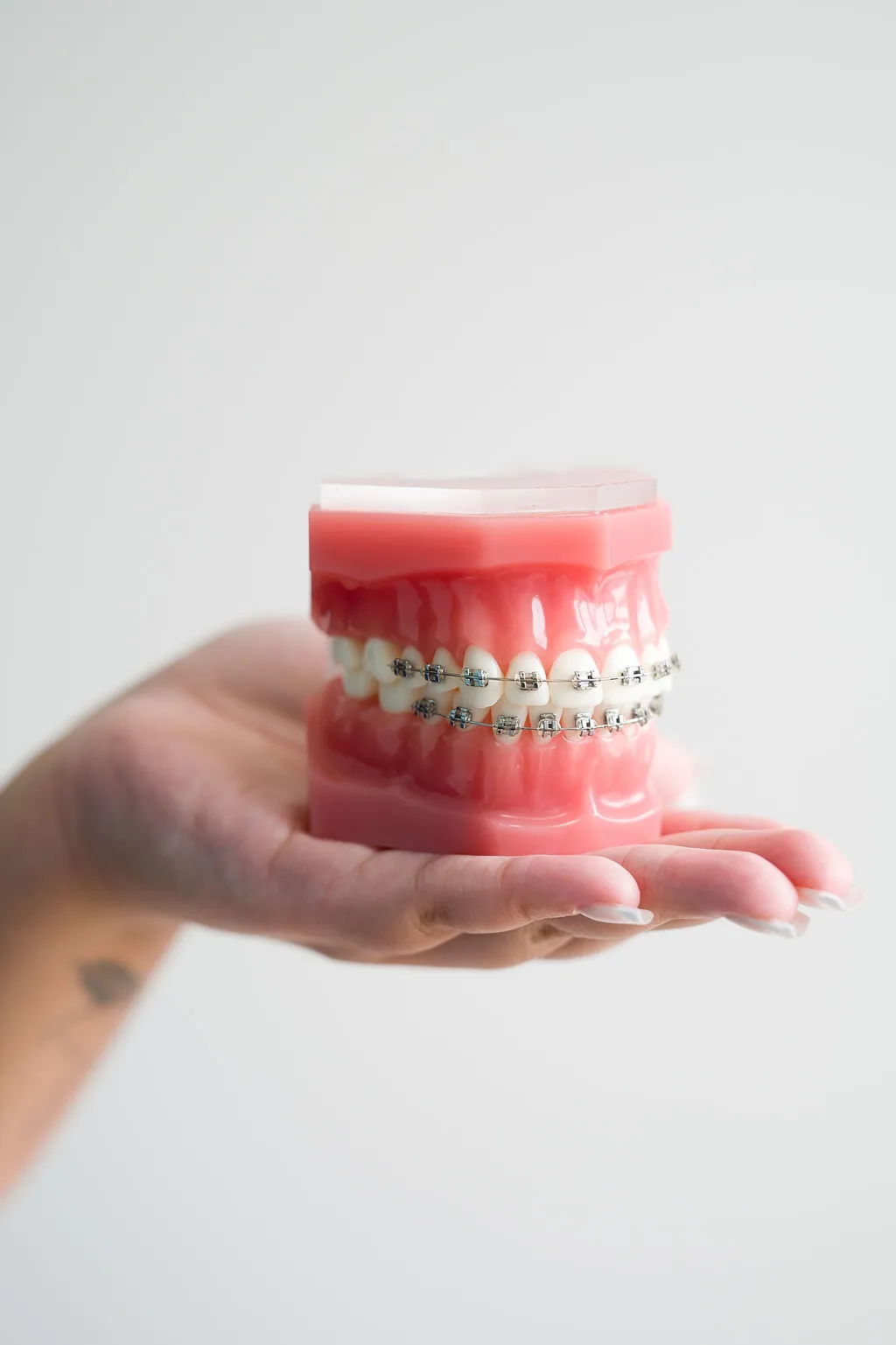
Metal braces
Stainless steel brackets with wires, and still the most popular option in orthodontics. Steel is also less delicate than ceramic.
The brackets are smaller and more comfortable than the generation most parents are picturing, and the wires are more flexible and gentler, which means less discomfort and less frequent visits than older braces needed. And you get to pick the colours, which matters more to a twelve-year-old than any of the above.
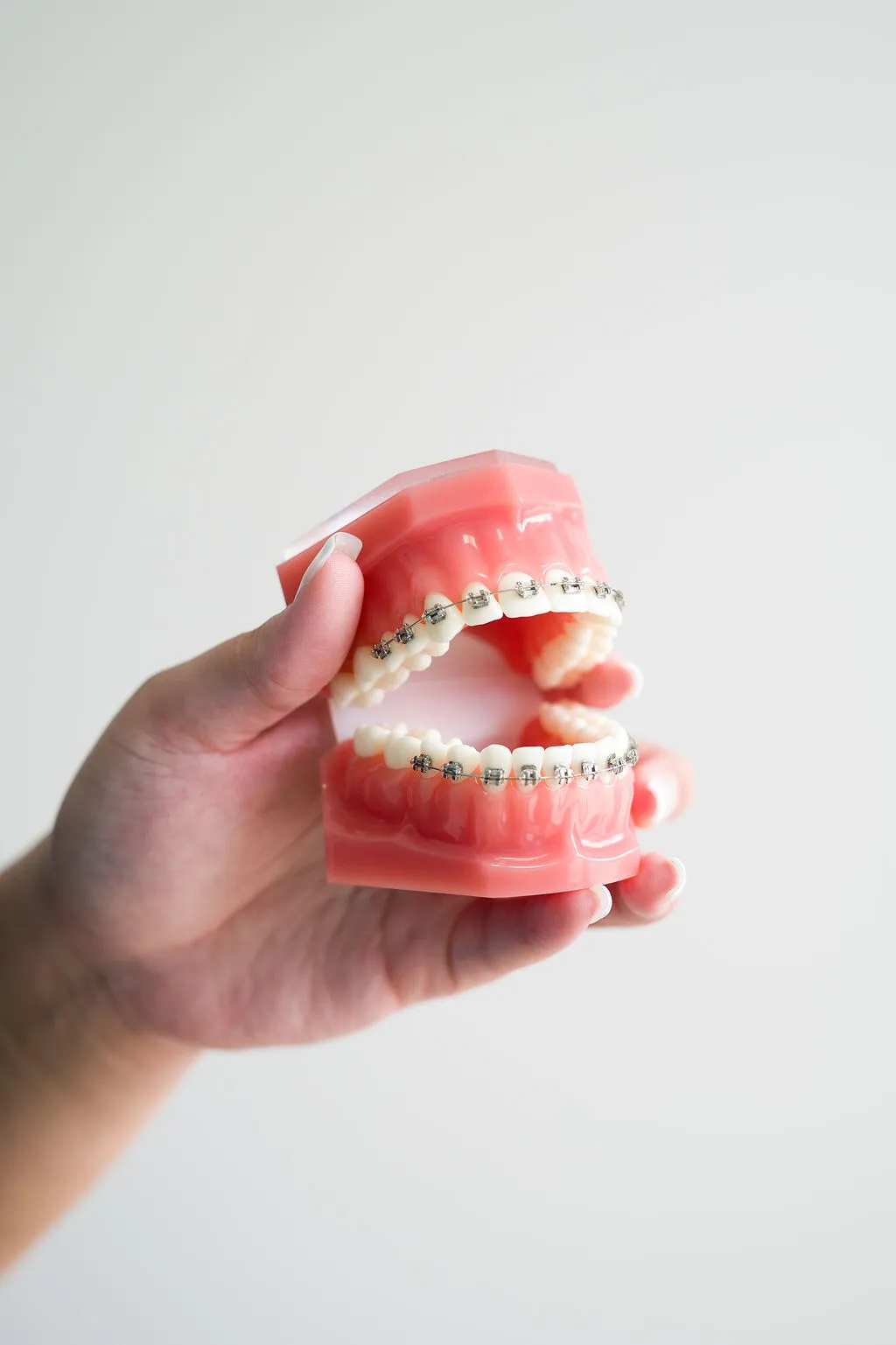
Ceramic and clear braces
Ceramic brackets do the same job with the same wires, but the brackets are made to be as clear and unobtrusive as possible. They suit teenagers and adults who want fixed braces without announcing it.
Two honest trade-offs. Ceramic is more delicate than steel, so you have to be more careful about what you eat. And the brackets can pick up stains from tea, coffee, wine, other dark foods, and smoking — so a heavy coffee drinker should know that going in.
Living with braces
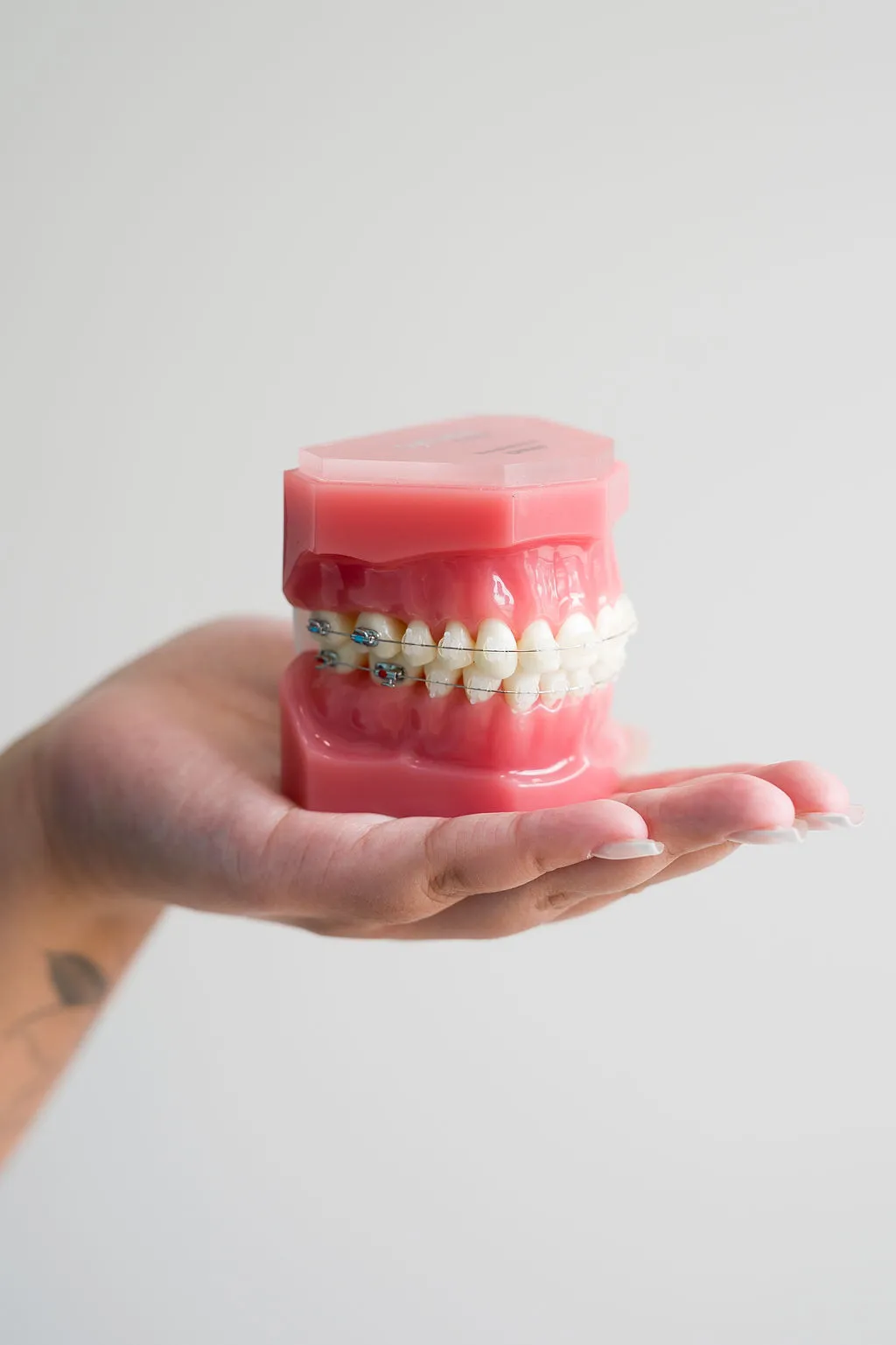
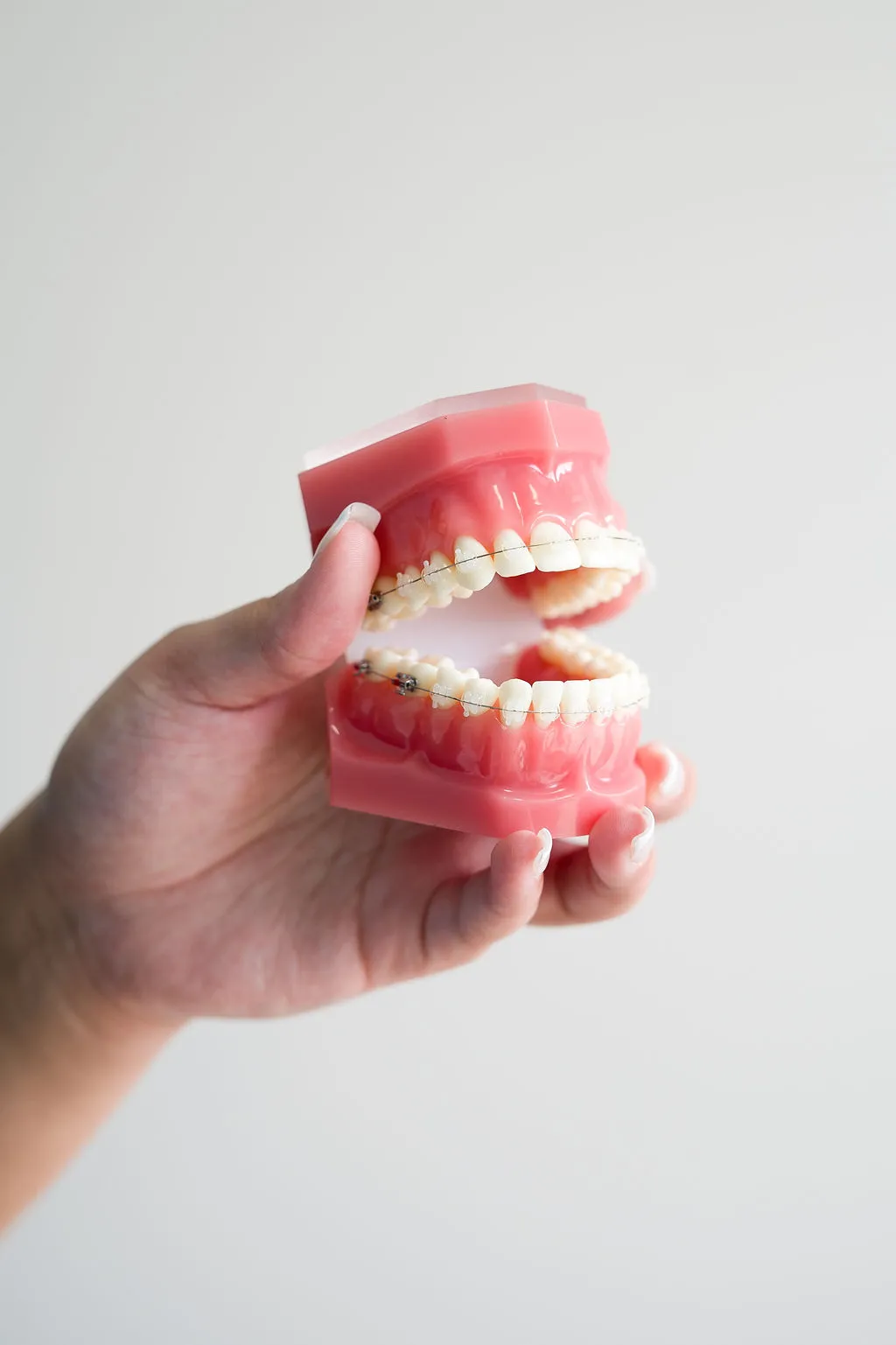
Life goes on quite normally. You can play sports and you can play wind instruments. The adjustments are mostly about food and about cleaning, and we go over all the instructions with you.
The practical rules:
- Go carefully with chewy, hard, and sticky foods — they can loosen brackets or break wires, and every repair adds treatment time
- Do not chew pens, pencils, or fingernails
- Wear a mouthguard made for braces for any contact sport
- Brush and floss properly, and keep your six-month cleanings and check-ups with your dentist
Read our full guide to life with braces →
When something breaks
It is not common, but a wire or band can come loose. Call us right away so we can repair it before it costs you treatment time. If a piece of wire comes off, keep it and bring it with you. In the meantime, the wax we give you (or a cotton ball) over a sharp end will stop it rubbing your cheek.
Keep reading
For Children
The American Association of Orthodontists suggests a first check-up by age 7.
For Teens
Full treatment usually starts around age 12, once the permanent teeth are in.
For Adults
Teeth can be straightened at any age, as long as the bone and gums are healthy.
Ready for a first visit that is actually kind of fun?
Consults are free, and we will walk you through what treatment would involve, how long it should take, and what it would cost.
- Free consultation
- Interest-free payment plans
- Monthly Saturday hours